Property
Short-Term Rental Regulation in Thailand: Airbnb, Condos and Licensing.
Thai law treats paid accommodation of less than monthly duration as hotel business. What that means for an Airbnb host, a condo owner and a landlord: the licence route, the small-property notification, the condominium layer, tax and enforcement.
- Published
- Updated
- Reading time
- 12 min read
- Author
- Justenda Editorial
Key facts
- Is Airbnb legal in Thailand?
- Only where the property holds a hotel licence or a filed non-hotel notification. The Department of Provincial Administration defines a hotel as paid accommodation of a duration lower than monthly, so the test is the length of the stay rather than the booking platform.
- What does a hotel licence cost?
- 10,000 baht for a type 1 licence, rising to 40,000 baht for type 4, plus an operating fee of 40 baht per room per year. The published processing time is 66 days.
- Is there an exemption for small properties?
- Yes. A place with no more than 8 rooms and no more than 30 guests in total can file a non-hotel notification instead. There is no fee at all, and the stated processing time is 40 days.
- Does renting for 30 days or more avoid this?
- A letting of a month or more falls outside the hotel definition, which covers compensation for a duration lower than monthly. A condominium's own co-owner regulations still apply, and the rental income is still taxable.
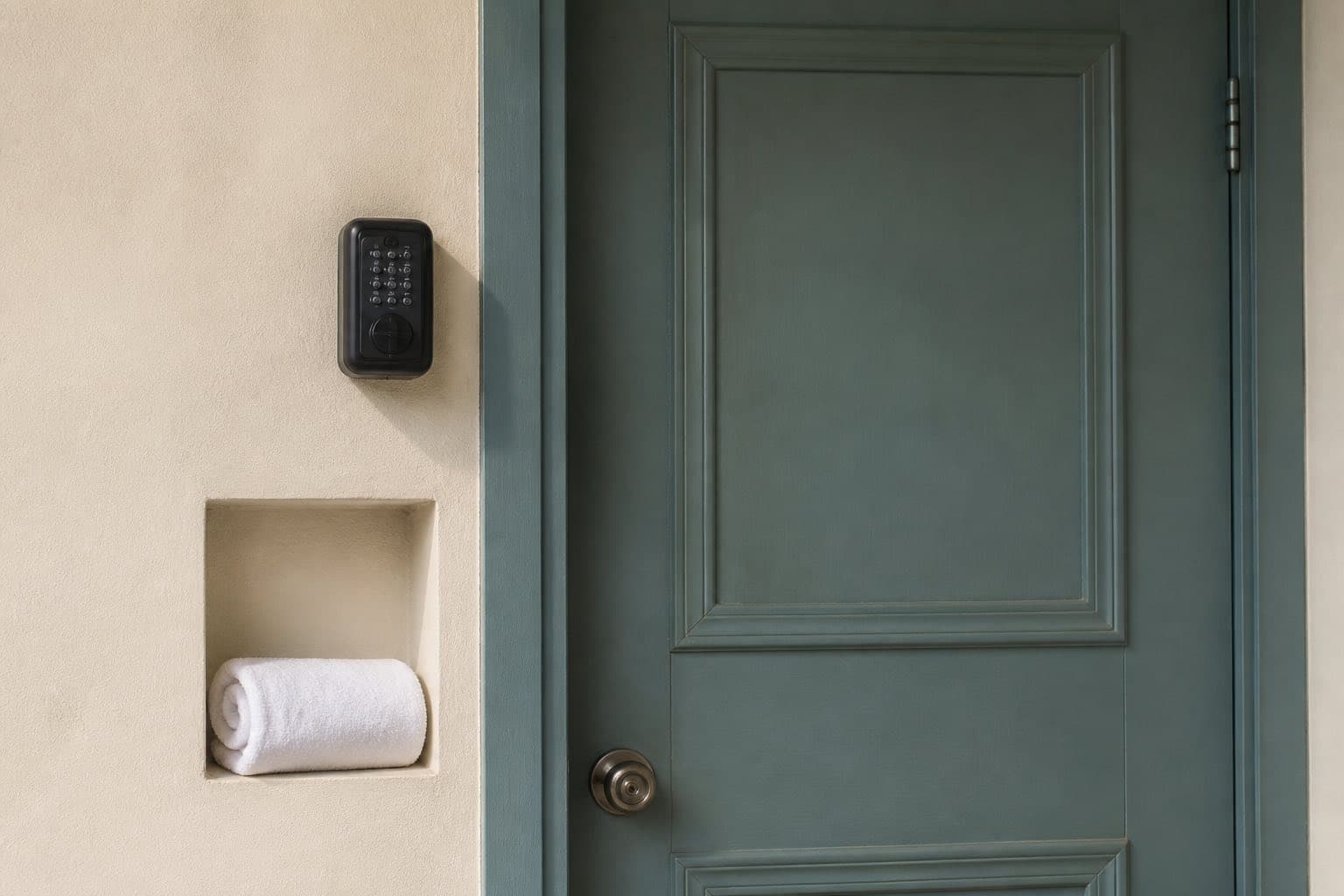
Is Airbnb legal in Thailand?
Short-term rental regulation in Thailand turns on the length of the stay rather than on the platform the booking came through. Paid accommodation of less than monthly duration counts as hotel business under Thai law. That single test is why the answer comes out the same for Airbnb, Booking.com, Agoda and a private arrangement made with a neighbour.
The Department of Provincial Administration, the Ministry of Interior agency that issues hotel licences, publishes the definition on its own hotel business licensing service guide. A hotel is accommodation set up for business purposes to provide temporary lodging to travellers or any other person for compensation, of a nature lower than monthly. The same page carries a plain warning: operating a hotel business without a licence is prohibited, and doing it anyway is punishable by imprisonment and a criminal fine.
So the answer is conditional. A property that holds a hotel licence, or that has filed the small-property notification described below, can take nightly bookings. A property holding neither is running a hotel business without permission, whatever the listing calls itself.
Calling a nightly booking a lease does not move the line. The test is duration and compensation, and a one-night contract is a one-night contract.
How short-term rental regulation works in Thailand
Three layers sit on top of each other, and clearing one does nothing for the others.
Duration. Anything below one month is hotel business, and hotel business needs a licence or a notification. This is the Hotel Act layer, and it is the one that gets discussed.
The building. A building used as a hotel needs permission for that use under building control law. The licence checklist asks for exactly that document where the Building Control Act applies, and for an engineer's or architect's structural safety certificate where it does not.
Ownership and house rules. A condominium unit sits under its building's own co-owner regulations and its juristic person, the body that administers the building. A house on leased land sits under its lease. A hotel licence touches neither.
The friction this creates is recognised inside government. In an interview published by the Senate on 25 April 2025, Nipon Ekwanich, who chairs its sub-committee on small and medium enterprises, said Thailand has more than 100,000 accommodation establishments while only tens of thousands hold licences, under 20 percent of the total. He put the cause on the statute book: three hotel laws, five building-control laws, two town-planning laws and three environmental-quality laws that conflict with one another, plus local ordinances and land-ownership law, all sitting under a Hotel Act written mainly for large buildings. His example is the 30 percent open-space requirement, which a small hotel in a shophouse cannot physically meet.
The practical consequence is that no single rule settles every building. A lawyer can check which layers actually bind a specific property before an owner commits to a model.
The hotel licence route: fees, documents and timing
The licence comes from the Department of Provincial Administration. In Bangkok the application goes to Peace and Order Section 3 at the Bureau of Investigation and Legal Affairs, Wang Chaiya. In the provinces it goes to the district office where the property sits. The applicant attends in person, or at least attends to be fingerprinted for the criminal-record check.
Official fees are fixed and published.
| Item | Official fee |
|---|---|
| Type 1 hotel licence | 10,000 baht |
| Type 2 hotel licence | 20,000 baht |
| Type 3 hotel licence | 30,000 baht |
| Type 4 hotel licence | 40,000 baht |
| Operating fee, every type | 40 baht per room per year |
Those are government charges only. Architect's drawings, an engineer's inspection certificate, an environmental impact report where one is required, and professional fees for preparing the file are separate costs, and none of them carries a published national rate.
The document list is long:
- national ID card of the applicant
- the hotel business licence application, form ror.ror.1
- building plans and layouts with the accompanying schedule
- proof of ownership of the building, or the owner's written consent where the building belongs to someone else
- a copy of the land title or possessory right for the site
- where the Building Control Act applies, the document showing the building is permitted to be used as a hotel
- where that Act does not apply, a structural safety certificate from a licensed controlled engineer or controlled architect
- a map showing the property and what surrounds it
- an environmental impact assessment certificate where one is required
- the result of a criminal record check
A company applying adds its certificate of registration, certified no more than three months before filing, the representative's ID card, and the letter appointing a director or authorised signatory to act.
The published processing time is 66 days. Read that as the service standard rather than a promise about a particular file. The Senate interview describes applications that stall at the first counter because an older building has no original construction permit, the Or.1 document, and cannot go forward without it.
The non-hotel notification route for small properties
There is a smaller-scale route, and filing it costs nothing.
A ministerial regulation amended in B.E. 2566, which is 2023, defines a category of accommodation that is not a hotel. The Chai Nat Provincial Administration Office states the threshold on the national government data catalogue: no more than 8 rooms in total and no more than 30 guests in total. It names the formats that qualify, which are homestays, pool villas, guesthouses, and rental houses where the owner lives on site.
The paperwork goes to the same offices as the licence. The service guide for the non-hotel notification lists what it takes:
- national ID card
- the non-hotel accommodation notification form
- proof of building ownership, or the owner's consent where the building belongs to someone else
- a copy of the land title or possessory right
- a location map
- evidence of the notifier's main source of income
- fingerprinting for the criminal record check
There is no fee at all, and the stated processing time is 40 days.
Two details repay a second read. The sixth item asks for evidence of the notifier's main source of income, which tells you the character of the category: it is built for accommodation run alongside a living, rather than as one. And the current forms date from the Ministry of Interior notification of 27 October 2023, published by the department's Hotel Licensing and Entertainment Venue Law Division, so guidance written before late 2023 describes a system that has since changed.
The acknowledgment letter issued for a filed notification is valid for five years from the date of filing, under clause 1/1 of the 2023 amendment published in the Government Gazette. A letter issued before the amendment came into force in late October 2023 is treated as issued under it, and its five years count from the amendment's commencement, which takes it to late October 2028.
Filing the notification also does nothing about the other two layers. It sits inside the Hotel Act and stops there. Building-control classification, a lease, and a condominium's co-owner regulations all continue to apply.
Why a condominium is the hardest case
The condominium unit is the format most people ask about and the one with the least room to move.
The owner owns the unit, but the building is governed collectively. Common property, permitted use and house rules sit with the co-owners and are administered by the juristic person. Many buildings prohibit commercial use in their own regulations, and that prohibition binds the owner whatever the Hotel Act would otherwise allow.
Enforcement has moved the same way. The Bangkok Post reported on 6 March 2025 that a legal expert at the Department of Provincial Administration told a House Committee on Administration meeting that renting condominium units on a daily basis resembles hotel operation and is prohibited, and that a juristic person aware of the activity may also face legal consequences. The same report describes a short-term plan to enforce the Hotel Act more strictly through joint operations involving the department, district offices, police and the Immigration Bureau, and to ask online platforms to remove daily-rental advertisements and to notify juristic persons so they can tell residents.
Anyone weighing a unit as a rental asset is weighing two questions at once: what the building permits, and what the law permits. The ownership side is covered in buying a condo in Thailand, and what happens when an owner and a building disagree is covered in property disputes between co-owners.
Renting for thirty days or more
The way out of the hotel definition is duration. Compensation for accommodation of a duration lower than monthly is hotel business, and a letting of a month or more falls outside it. That is why monthly and yearly lets are the ordinary route for a condominium owner or a villa owner who does not want a licence.
The route has its own paperwork. A written lease agreement in Thailand sets out the term, the rent, the deposit and the condition of the property, and it is the document a court reads when an arrangement fails. Rental deposits and what a landlord may withhold covers the part tenants query most often. Where the arrangement is longer or more structural, how leasehold and freehold differ in Thailand and a usufruct are the two shapes worth understanding before anyone signs.
Two cautions. A lease written for thirty days that is really a rolling nightly booking will be read on its substance. And a longer letting does not remove the tax obligation, which is the next section.
Tax on rental income
Rental income is taxable whether the property is licensed or not, and whether the guest paid a platform or paid the owner directly. The annual land and building tax on the property itself is a separate bill, covered in land and building tax in Thailand.
The Revenue Code puts money or any other gain derived from rent of property in section 40(5)(a), the assessable income list. The same section gives the assessment official a power worth knowing about. Where there is reason to believe a taxpayer has underreported rent, the official may assess the income at the reasonable rent for that property under normal circumstances, and the assessed figure is then treated as the taxpayer's assessable income. The taxpayer can appeal, but by then the burden has moved.
Section 41 of the same chapter closes the offshore question. A taxpayer who derives assessable income from a property situated in Thailand pays Thai tax on it whether the money is paid inside or outside the country. A platform settling into a foreign bank account changes nothing about that.
Above a certain turnover a second tax can appear, and this is where the two models part company. Section 81 of the Revenue Code exempts the rental of immovable property from VAT, so a straight letting sits outside it however much the rent adds up to. Nightly accommodation is a service, and it is not on that exemption list. The Revenue Department states that any person who regularly provides services in Thailand with annual turnover exceeding 1.8 million baht is subject to VAT, currently at 7 percent, and that a small operator below that turnover is exempt. One condominium unit rarely reaches the threshold. A cluster of villas can.
There is one more cost that no national figure covers. Where a property switches from residential to commercial use, what is owed on the property itself depends on how the local authority classifies that use, which is a question for the local office rather than a number to look up. On the filing side, a tax consultant in Thailand and the mechanics of personal income tax in Thailand are the two places to start.
Reporting foreign guests to immigration
Whoever controls the accommodation carries a separate reporting duty. Section 38 of the 1979 Immigration Act, quoted on the Immigration Bureau's TM30 notification portal, requires house owners, heads of household, landlords and hotel managers who accommodate a foreign national on a temporary basis to notify local immigration within 24 hours of that person's arrival. The duty follows the accommodation rather than the licence, so it reaches a private landlord with one tenant as surely as it reaches a hotel, and an immigration lawyer in Thailand is the person to ask when an owner and an immigration office read it differently.
What enforcement actually looks like
The department's own warning is the starting point. Operating a hotel business without a licence is prohibited, and it is punishable by imprisonment and a criminal fine. The Act's exact penalty figures sit in the text of the Act, published in the Government Gazette, so the numbers repeated on commercial sites are worth checking against the Act itself before anyone relies on them.
What courts have actually ordered is on the record. The Bangkok Post reported in May 2018 on two rulings against owners at the Wan Vayla condominium in Hua Hin, Prachuap Khiri Khan, who had let rooms by the day and the week without a hotel licence. In the case decided on 5 January 2018 the court ordered a 5,000 baht fine plus 500 baht for each day of a 20 day stay, 15,000 baht in total. In the case decided on 16 January it ordered a 5,000 baht fine plus a further 100 baht a day across an 81 day period, 13,100 baht in total. Those are the amounts two courts imposed on those facts, and they are not a published penalty scale.
The practical exposure runs wider than the fine. A juristic person that knew about the activity is in the frame. Platforms are being asked to pull the listings. And the 2025 enforcement plan runs jointly with the Immigration Bureau, which means the guest-reporting question and the licensing question tend to arrive in the same conversation.
When a lawyer helps
Plenty of owners never need one. A single unit let by the year, with a written lease and the rent declared, is a simple arrangement to run.
The cases that justify professional help are the ones where the layers disagree. A building whose co-owner regulations contradict the owner's plan. An older property with no original construction permit. A pool villa choosing between the licence and the notification. An enforcement letter that has already arrived. A property lawyer in Thailand can read the title, the building consent and the house rules together and say which route is genuinely open.
For a condo in Bangkok, lawyers for Bangkok condo leases and disputes can run that review. For a villa in Phuket, lawyers for Phuket villa leases and land checks can do the same.
A foreign owner who handles bookings and guests personally raises a further question about what work a foreigner is permitted to do in Thailand, and that is worth settling before the guests arrive.
Frequently asked questions
- Is Airbnb illegal in Thailand?
- The platform is lawful and so is listing on it. What Thai law regulates is the length of the stay. The Department of Provincial Administration defines a hotel as accommodation provided as a business, for compensation, of a nature lower than monthly, and its own service guide warns that operating a hotel business without a licence is prohibited and punishable by imprisonment and a criminal fine. A property that holds a hotel licence or a filed non-hotel notification can take nightly bookings. A property that holds neither cannot, whichever platform the guest came from.
- What counts as a short-term rental under Thai law?
- Accommodation provided as a business, to travellers or anyone else, for compensation, of a duration lower than monthly. Three parts matter. It has to be a business rather than hosting a friend, there has to be payment, and the stay has to be shorter than a month. A booking of one month or more sits outside that definition, which is why long lets are the usual route for owners who do not want a licence.
- Can I rent my condo by the night if the juristic person agrees?
- Agreement from the building removes one obstacle and leaves the other in place. The Hotel Act still applies to the unit, so nightly letting without a licence or a filed notification remains unlicensed hotel business. A legal expert at the Department of Provincial Administration told a House Committee meeting in March 2025 that daily condominium letting resembles hotel operation and is prohibited, and that a juristic person aware of the activity may also face legal consequences. A property lawyer can check what a particular building and a particular title actually permit.
- Do I need a hotel licence for a single villa or pool villa?
- Not necessarily. A pool villa is one of the formats named in the non-hotel category, which covers a place with no more than 8 rooms in total and no more than 30 guests in total. That route is filed as a notification rather than applied for as a licence, there is no fee, and the stated processing time is 40 days. It asks for evidence of the notifier's main source of income, so it fits accommodation run alongside a living rather than as the whole of one. Building-control classification and any lease over the land still apply on top.
- Do I pay Thai tax on Airbnb income if the platform pays me abroad?
- Yes. Section 40(5)(a) of the Revenue Code treats money or any other gain derived from rent of property as assessable income, and section 41 makes assessable income from a property situated in Thailand taxable whether it is paid inside or outside the country. Where an assessment official has reason to believe rent has been underreported, the official may assess the income at the reasonable rent for the property under normal circumstances. Once annual turnover from regularly provided services passes 1.8 million baht, VAT registration comes into it as well.
Sources
- Department of Provincial Administrationdopa.go.th/public_service/service_guide371/view372
- Department of Provincial Administrationdopa.go.th/public_service/service_guide371/view382
- Home lodgechainat.gdcatalog.go.th
- Department of Provincial Administrationmulti.dopa.go.th/omd3/news/cate1/view45
- Royal Thai Government GazettePDFratchakitcha.soc.go.th
- Latestsenate.go.th
- Immigration Bureau: Home entm30.immigration.go.th
- Revenue Departmentrd.go.th/english/37749.html
- Revenue Departmentrd.go.th/english/6043.html
- Revenue Departmentrd.go.th/english/37732.html
- Bangkok Post: Thailand cracking down on illegal daily condo rentalsbangkokpost.com
- Bangkok Post: Airbnb bookings illegal court declaresbangkokpost.com
General information only, not legal advice. Laws and processes in Thailand change; confirm details with a qualified professional.