Justenda.

Service guide

Franchise Agreements in Thailand.

Thailand regulates franchising through competition law. What the franchising guidelines mean for an agreement, and what a foreign franchisor has to solve first.

2 firms on Justenda. Compare firms

Key facts

Does Thailand have a franchise law?
Not a standalone disclosure statute. Franchising is regulated through competition law: the Trade Competition Commission has issued Guidelines for the Assessment of Unfair Trade Practices in Franchising, made in B.E. 2562 (2019).
What does that mean for an agreement?
Terms a franchisor treats as ordinary brand control, including exclusivity, sourcing requirements, renewal and post-term restrictions, can be assessed against those guidelines by a regulator rather than settled between the parties.
Can I use my existing franchise agreement?
Not without localisation. An imported agreement carries the assumptions of its home system, including disclosure rules that do not apply here and control terms tested against a different competition regime.
What does a foreign franchisor need to solve?
Trademark protection in Thailand, and a structure that works under the Foreign Business Act, whether through a local entity, a master franchisee, or direct licensing from abroad.

Franchise agreements, done properly.

Talk to someone who does this every week. Verified firms reply with how they would handle your case and what it costs. Free, no account needed.

Franchising in Thailand is policed by competition law

Thailand does not run a standalone franchise disclosure statute of the kind familiar in the United States or Australia. What it has instead is competition law, and that turns out to matter a great deal.

The Trade Competition Act B.E. 2560 (2017) governs unfair trade practices, and the Trade Competition Commission has issued a specific notice: Guidelines for the Assessment of Unfair Trade Practices in Franchising, made in B.E. 2562 (2019) and since revised.

The practical consequence is that a franchise agreement is not simply a private contract between franchisor and franchisee. Terms that a franchisor considers normal brand control can be assessed against those guidelines, and the assessment is made by a regulator rather than by the parties. Franchise agreements imported from another country and translated are the ones most likely to contain a problem, because they were drafted against a different regulatory model.

That makes the review question specific: not "is this a good agreement" but "does this agreement sit within the Thai guidelines".

Warning: An imported franchise agreement is the highest-risk starting point

A US or European franchise agreement translated into Thai carries the assumptions of its home system: disclosure obligations that do not apply here, and control provisions that were tested against a different competition regime. It also usually carries a dispute clause and a governing law that were chosen without reference to where the franchisee's assets are. Translation is not localisation.

Your options

Contact experts who handle franchise agreements in Thailand

A first shortlist from 2 firms on Justenda. Compare them, then message one or several at once.

Law firmBangkokEnglish · Thai · Spanish

Experts assisting clients in conducting their businesses and protecting their rights and investments in Thailand across a wide range of legal matters.

The four problems a franchise lawyer solves

The first is the agreement against the guidelines. Territory, exclusivity, sourcing requirements, pricing, renewal, termination and post-term restrictions are the areas where franchising agreements most often meet competition scrutiny, and the guidelines exist precisely because those terms can shade from brand protection into restriction.

The second is the brand. A franchise system without registered trademark protection in Thailand is licensing something it may struggle to defend, and registration takes time that should start well before the first franchisee signs rather than after a dispute. This is trademark work rather than corporate work, and it usually runs in parallel.

The third is the structure for a foreign franchisor. The Foreign Business Act restricts foreign participation in listed activities, and how a foreign brand operates in Thailand, whether through a local entity, a master franchisee, or direct licensing from abroad, is a structural decision with licensing and tax consequences. Where a local entity is needed, company registration comes first, and where the activity is restricted the routes are a foreign business licence in Thailand or a BOI application in Thailand.

The fourth is the operating documents that sit around the agreement: the operations manual, supply arrangements, and the marketing fund. These are where day-to-day friction lives, and where terms drafted loosely produce most of the disputes.

How a franchise programme is usually built

  1. Protect the brand first

    Trademark protection in Thailand before franchisees are recruited, not after. This is the step most often left too late.

  2. Decide the operating structure

    Local entity, master franchise, or direct licensing from abroad. Each has different licensing, tax and control consequences under the Foreign Business Act.

  3. Draft against the Thai guidelines

    Territory, exclusivity, sourcing, pricing, renewal, termination and post-term restrictions reviewed against the Trade Competition Commission's franchising guidelines rather than against the home-country model.

  4. Build the surrounding documents

    Operations manual, supply terms and marketing fund arrangements. Loose drafting here produces most of the running disputes.

  5. Set the dispute mechanism deliberately

    Forum, governing law and language, chosen with reference to where a franchisee's assets actually are.

  6. Plan the franchisee exit

    Termination, what happens to the site and the stock, and what the former franchisee may do next. These are the terms competition guidance looks at most closely.

For prospective franchisees

The asymmetry in franchising is real: the franchisor has done this many times and you are doing it once. Two things are worth paying for before signing.

The first is an independent review of the agreement, by someone who is not the franchisor's lawyer. The specific questions are what happens at renewal, what happens on termination, what you are required to buy and from whom, and what you may do afterwards.

The second is verification of what you are being told. Registered trademarks, the corporate identity of the entity you are contracting with, and its signing authority are all checkable against public records, and checking them is inexpensive.

On fees, the two sides of this work price differently. An independent review of a franchise agreement for a prospective franchisee is a defined piece of work most firms quote as a fixed fee. Building a franchise programme for a franchisor is not, because it spans trademark, structure and several documents, and is usually part fixed and part hourly. No credible published source gives professional fee ranges for this work, so compare written scopes rather than headline numbers.

Franchise disputes, when they come, run as contract disputes and the terms drafted at the start decide them. For the wider practice, corporate lawyers in Thailand handle franchise agreements alongside licensing and structure.

This page is general information, not legal advice. Whether specific terms sit within the competition guidelines depends on the system and the market position, so speak with a qualified professional.
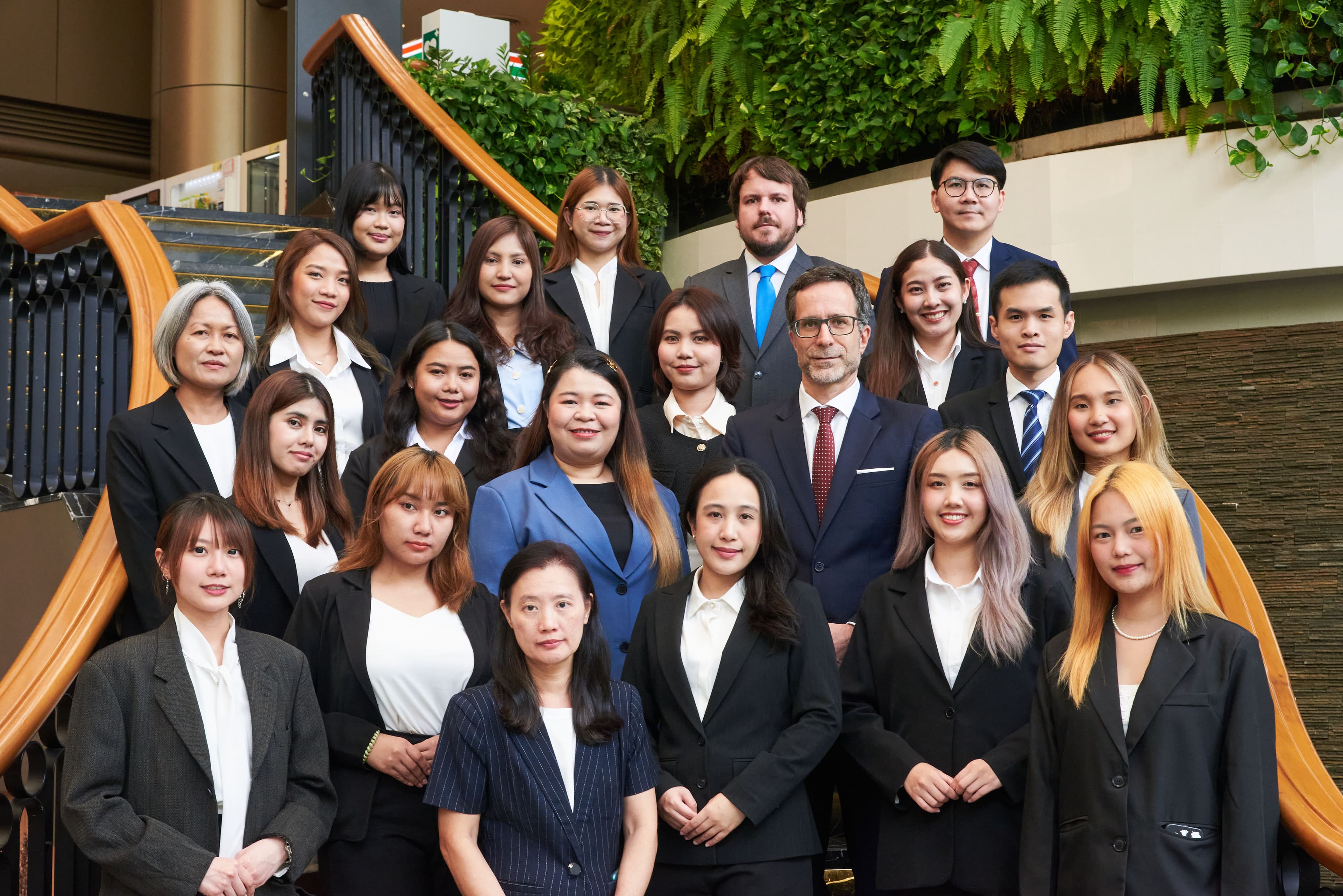

Also listed

More firms that handle franchise agreements

Every one of these is verified on Justenda and can take on franchise agreements work in Thailand.

Law firmBangkokEnglish · Thai · Spanish

Experts assisting clients in conducting their businesses and protecting their rights and investments in Thailand across a wide range of legal matters.

Next step

Describe your case once.

Send one focused inquiry with your situation, timing, and preferred language. Firms reply with how they would handle it and what it costs, so you can compare answers instead of chasing quotes.

Common questions

Frequently asked questions

Is franchising regulated in Thailand?
There is no standalone franchise disclosure statute of the kind found in the United States or Australia. Franchising is regulated through competition law instead. The Trade Competition Act B.E. 2560 (2017) governs unfair trade practices, and the Trade Competition Commission has issued a specific notice of Guidelines for the Assessment of Unfair Trade Practices in Franchising, made in B.E. 2562 (2019) and since revised. The practical effect is that franchise terms can be assessed by a regulator against those guidelines rather than being purely a matter between franchisor and franchisee.
Can I use my existing franchise agreement in Thailand?
Translating it is not enough. An agreement drafted for another country carries that country's assumptions: disclosure obligations that do not apply in Thailand, and control provisions that were tested against a different competition regime. It usually also carries a governing law and dispute clause chosen without reference to where a Thai franchisee's assets are. The productive approach is to treat the home agreement as a starting point and review it against the Thai franchising guidelines, particularly on exclusivity, sourcing, pricing, renewal, termination and post-term restrictions.
What should a foreign franchisor do first in Thailand?
Protect the brand. A franchise system without registered trademark protection in Thailand is licensing something it may struggle to defend, and registration takes time that should begin well before the first franchisee is recruited. Alongside that sits the structural question: whether to operate through a local entity, a master franchisee, or direct licensing from abroad. The Foreign Business Act restricts foreign participation in listed activities, so the structure has licensing and tax consequences that are much cheaper to get right at the outset.
What should a franchisee check before signing?
Get an independent review from someone who is not the franchisor's lawyer, and focus it on four questions: what happens at renewal, what happens on termination, what you are required to buy and from whom, and what you are permitted to do afterwards. Separately, verify what you are being told against public records: the registered trademarks, the corporate identity of the entity you are actually contracting with, and the signing authority of the person executing the agreement. Those checks are inexpensive relative to the commitment.
Which franchise terms attract the most scrutiny?
The areas where brand protection shades into restriction: territory and exclusivity, requirements to source goods or services from the franchisor or nominated suppliers, pricing, renewal conditions, termination rights, and restrictions on what a franchisee may do after the relationship ends. Those are exactly the subjects the Trade Competition Commission's franchising guidelines address, which is why an agreement should be drafted against them rather than reviewed against them after a complaint has been made.

All firms

Every firm that can help you with franchise agreements

Law firmBangkokEnglish · Thai · Spanish

Experts assisting clients in conducting their businesses and protecting their rights and investments in Thailand across a wide range of legal matters.

Guides & Insights

Practical explainers on this topic: general information, not professional advice.

All guides and insights

Browse by city

Franchise Agreements near you