Business & Corporate
The US-Thailand Treaty of Amity, Explained (2026 Guide).
American founders have a route no other nationality does. A clear 2026 guide to owning up to 100% of a Thai company under the US-Thailand Treaty of Amity: who qualifies, what it excludes, and how to get certified.
- Published
- Reading time
- 6 min read
- Author
- Justenda
Key facts
- How much can Americans own?
- Up to 100% of a Thai company, for qualifying US citizens and US-majority companies.
- Who qualifies as American?
- At least 51% US-held shares and a majority of American (or American and Thai) directors.
- Does it let you own land?
- No. Like most companies in Thailand, an Amity company cannot own land. BOI promotion is the main exception, for land used in a promoted activity.
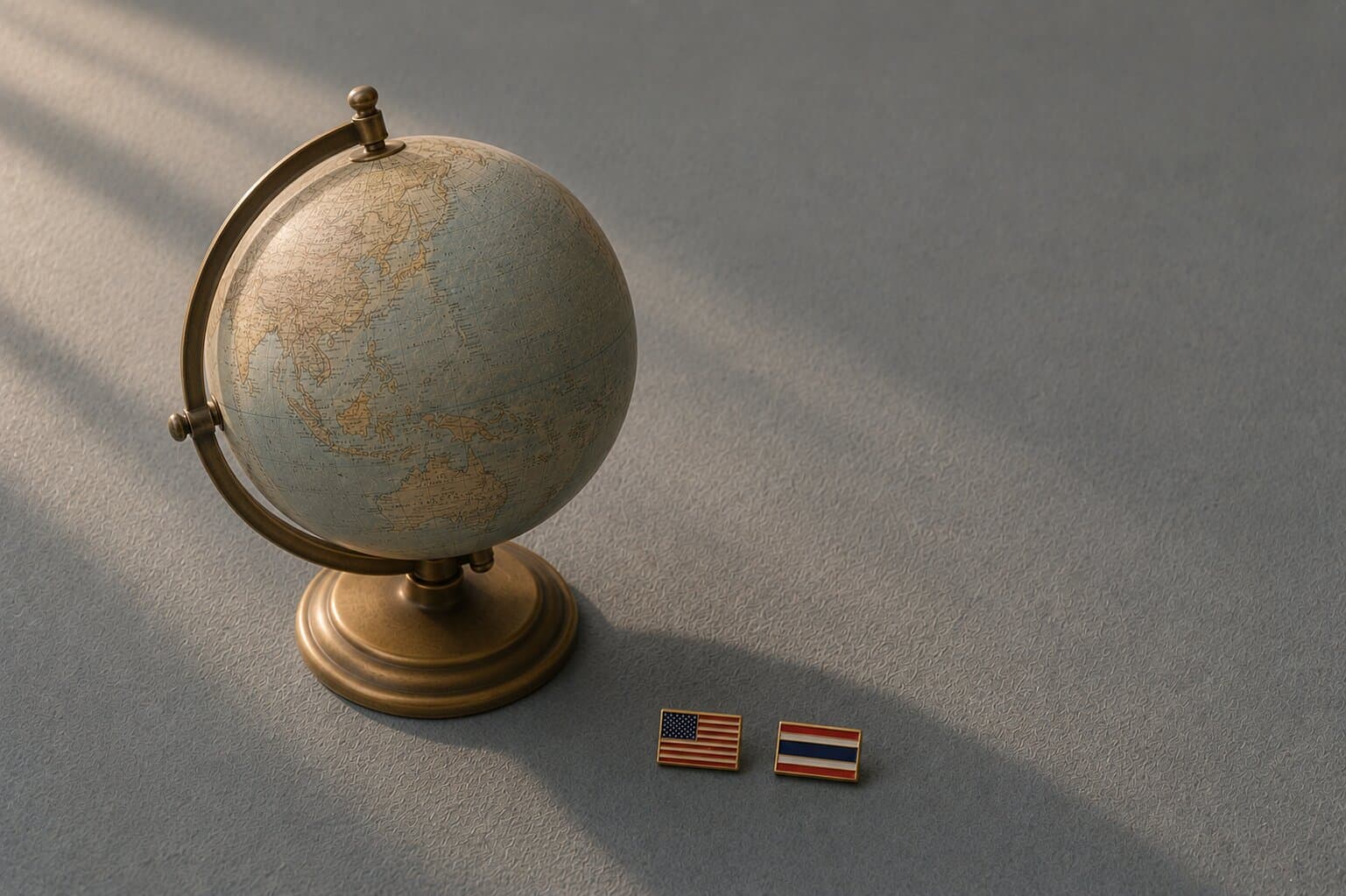
The short version: Americans have a route no other nationality has
Most foreigners who want to own a Thai company face the same wall: the Foreign Business Act treats any company with 50% or more foreign shares as "foreign," and a foreign company needs a licence to run most service businesses. Americans can step around that wall.
Under the Treaty of Amity and Economic Relations, signed by the United States and Thailand in 1966, a US citizen or a US-majority company can own up to 100% of a Thai company and operate on broadly the same footing as a Thai business, in most sectors, without a Foreign Business License.
This is one of the routes covered in the broader guide to setting up a company in Thailand as a foreigner. Here we go deeper: what the treaty gives you, who counts as "American," what it leaves out, and how the certification actually works in 2026.
What the US-Thailand Amity Treaty actually gives you
The headline benefit is national treatment: a qualifying American company is treated like a Thai company for the activities the treaty covers. In practice that means two things.
- Majority or full foreign ownership. You can hold up to 100% of the shares, rather than capping foreign ownership at 49%.
- No Foreign Business License for covered activities. Service businesses that would normally need a licence from the Department of Business Development can be run directly, because the treaty already grants the right.
Instead of a licence, an Amity company applies for a Foreign Business Certificate, which recognises a right the treaty already gives rather than granting new permission. The distinction matters: a certificate is confirmation, not a discretionary approval that can be refused on the merits.
Who qualifies as an "American" company
The treaty protects American people and American-owned businesses, so the test is about real US ownership and control.
- Shareholding: at least 51% of the shares must be held by US citizens or US-incorporated companies.
- Directors: a majority of the directors must be American, or American and Thai. A director from a third country can sit on the board, but is generally expected to sign alongside an American or Thai director to bind the company.
- Ownership all the way up: if your Thai company is owned by another company, the US-majority test has to hold at each level up to the ultimate parent. You cannot put a non-US holding company in the middle and still qualify.
A sole American owner qualifies on the strength of their citizenship. The structure gets more involved when there are several shareholders or a corporate parent, which is the point where most applicants check the details with a corporate lawyer before filing.
What the treaty does not cover
The Treaty of Amity is generous, but it has clear edges. It does not give national treatment in a set of reserved areas:
- Communications
- Transport
- Fiduciary functions
- Banking that involves taking deposits
- Exploiting land and other natural resources
- Owning land
- Domestic trade in local agricultural products
Two of these catch people out. First, owning land. National treatment does not extend to land, so an Amity company still cannot buy land the way a Thai company can. Founders who need premises usually lease, or look at BOI promotion, which can grant limited land rights for a promoted activity. Second, the financial and communications carve-outs are broad, so anything close to banking, fund management, or telecoms needs a careful look before you rely on the treaty.
How to get certified, step by step
Getting the benefit is a process, not an automatic status. The usual path runs like this:
- Register the Thai company first. You incorporate a normal Thai limited company with the Department of Business Development, then have the corporate documents certified and translated into English. That incorporation step follows the ordinary Thai company registration process.
- Get certified by the US Commercial Service. You apply to the US Commercial Service at the US Embassy in Bangkok for a letter certifying that the business is American-owned and American-managed. This step usually needs notarised proof of US citizenship for the shareholders and directors, plus the company's incorporation documents.
- Apply to the DBD for a Foreign Business Certificate. With the embassy's letter, you apply to the Department of Business Development for the certificate that records your treaty rights.
End to end, plan for roughly four to eight weeks, sometimes longer if documents need to be re-issued or notarised abroad. The US Commercial Service charges a fee for the certification letter; confirm the current amount with the embassy, since it changes from time to time.
Capital, and the costs people forget
The treaty changes who can own the company. It does not remove Thailand's ordinary capital rules.
- A foreign company doing a non-restricted business needs at least 2 million THB in registered capital under the Foreign Business Act. If the activity is one that would otherwise need a licence, the minimum rises to 3 million THB.
- If you want to sponsor your own work permit as a foreign director, plan for around 2 million THB of registered capital per foreign work permit. Visas and work permits sit alongside the capital rules and are worth confirming early.
The capital has to be genuinely brought into Thailand on the schedule the rules set, not just written on paper.
Amity, BOI, or a Thai majority?
The treaty is one of three common routes to majority foreign ownership, and it is not always the best fit.
- Choose Amity when you are American, your business is in services or trading, and you want full ownership without chasing incentives. It is the cleanest path for most American-run service and trading companies.
- Look at BOI promotion instead if your business is in a targeted industry and you want tax holidays, duty exemptions, or land rights. BOI is open to any nationality and gives more than ownership.
- Consider a genuine Thai-majority company if the treaty's excluded sectors block you, or if a real Thai partner makes commercial sense. What you cannot do is use Thai shareholders as stand-ins, which is illegal and covered in the nominee shareholders guide.
When the treaty is worth it
For an American founder in consulting, software, trading, marketing, or most service work, the Treaty of Amity is usually the simplest way to own the whole company. It avoids the discretionary licence process and the 49% ceiling in one move.
It is worth less if you need to own land, if you are in one of the excluded financial or communications sectors, or if the tax incentives from BOI would outweigh the convenience. A short conversation with a corporate lawyer in Thailand about your specific activity will tell you quickly whether Amity is the right tool or whether another route fits better.
Get the certification right
The treaty is valuable, and the paperwork rewards care. The certification turns on proving genuine American ownership and control at every level, and on getting the documents notarised and translated correctly. Mistakes here mean re-filing and weeks of delay.
When you are ready, you can compare foreign business and Amity lawyers on Justenda, message them directly, and get a fee quote before you commit.
A note on what this guide is
This is general information to help you understand the Treaty of Amity, not legal advice, and the rules and fees change. Confirm the current requirements with the US Commercial Service in Bangkok, the Department of Business Development, or a qualified Thai lawyer before you rely on the treaty for your business.
Frequently asked questions
- What is the US-Thailand Treaty of Amity?
- A 1966 treaty that lets US citizens and US-majority companies own up to 100% of a Thai company and operate like a Thai business in most sectors, without a Foreign Business License.
- Who can use the Amity Treaty?
- US citizens and companies with at least 51% US ownership and a majority of American or American-and-Thai directors, with US ownership holding at every level up to the ultimate parent.
- What does the treaty not cover?
- Land ownership, plus reserved areas such as communications, transport, fiduciary functions, deposit-taking banking, exploiting natural resources, and domestic trade in local agricultural products.
- How do you get certified under the treaty?
- Register a Thai company, get a certification letter from the US Commercial Service at the US Embassy in Bangkok, then apply to the Department of Business Development for a Foreign Business Certificate. Plan for roughly four to eight weeks.
- Does the Amity Treaty remove the capital requirements?
- No. A foreign company still needs at least 2 million THB in registered capital, or 3 million THB for an activity that would otherwise need a licence.
Sources
- U.S. Embassy: Business faqsth.usembassy.gov
- U.S. Embassy: Doing business in Thailandth.usembassy.gov
- Board of Investment: Foreign business actPDFboi.go.th
- United NationsPDFtreaties.un.org
General information only, not legal advice. Laws and processes in Thailand change; confirm details with a qualified professional.