Blumenthal Richter Sumet & Schuler
Blumenthal Richter Sumet & Schuler is a leading law firm in Bangkok, Thailand. We provide legal services in all practice areas.
Pricing on request
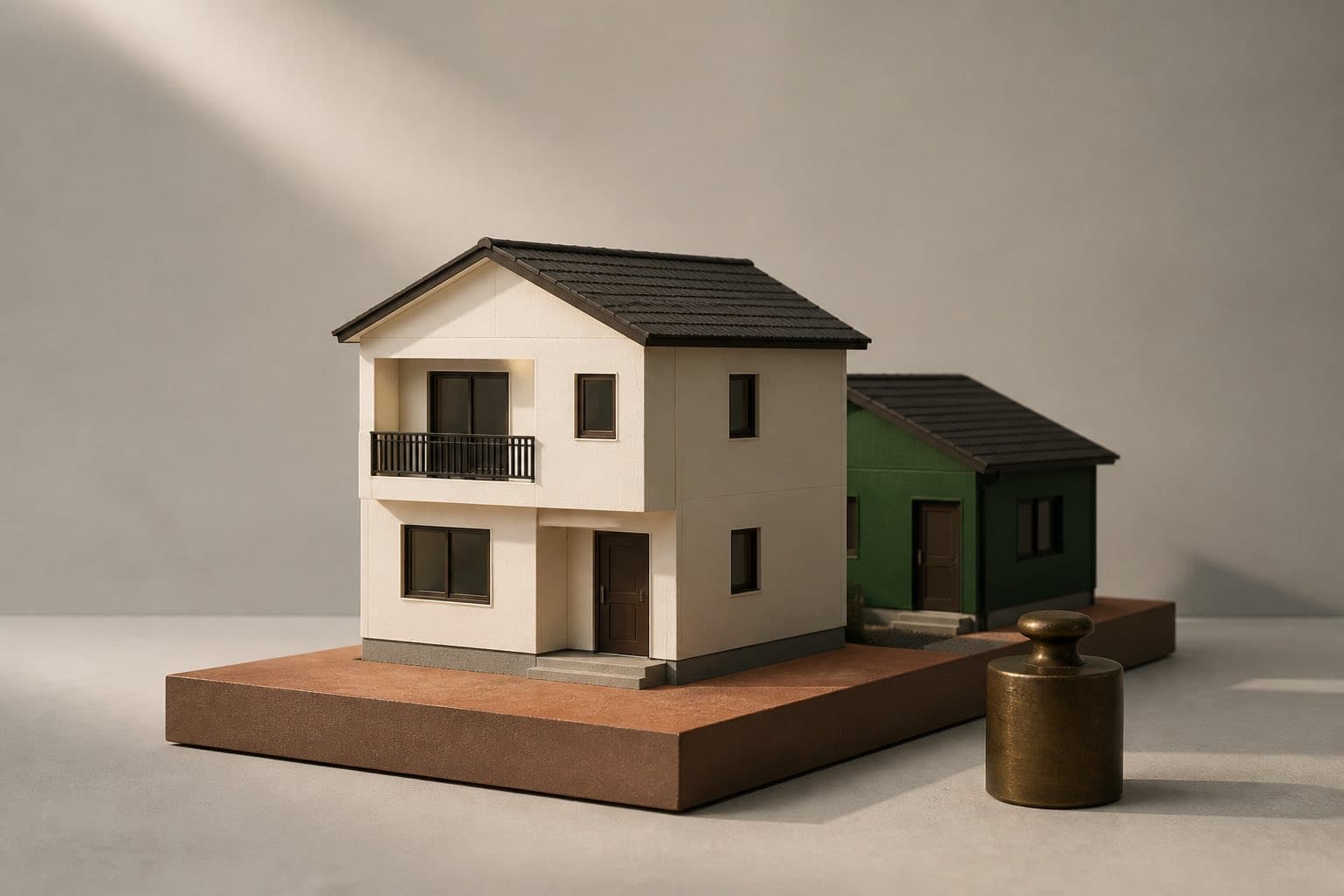
Legal help with purchases, leases, title checks, ownership structures, and property disputes.
7 firms on Justenda.

Blumenthal Richter Sumet & Schuler is a leading law firm in Bangkok, Thailand. We provide legal services in all practice areas.
Pricing on request
International boutique law firm in Bangkok and Phuket, providing legal and tax services to investors, businesses, and private clients across Thailand
฿7,000–12,000 / hour
International law firm specializing in immigration and cross-border transactions.
Pricing on request
International boutique law firm in Bangkok and Phuket, providing legal and tax services to investors, businesses, and private clients across Thailand
฿7,000–12,000 / hour

International Legal and Cross-Border Business Advisory in Thailand and Asia
Pricing on request

Blumenthal Richter Sumet & Schuler is a leading law firm in Bangkok, Thailand. We provide legal services in all practice areas.
Pricing on request
International law firm specializing in immigration and cross-border transactions.
Pricing on request

Herrera and Partners, is a leading law firm in Bangkok, Thailand. With a dedicated team of skilled and international lawyers in Bangkok.
฿10,000–20,000 / hour

Bangkok-based law firm delivering strategic, business-focused legal advice with deep local expertise and a practical, solutions-oriented approach.
฿3,500–15,000 / hour

Experts assisting clients in conducting their businesses and protecting their rights and investments in Thailand across a wide range of legal matters.
Pricing on request
Browse by service
The work property law firms in Thailand handle most often, from condo title transfers to long-term lease structures and disputes.

Foreign quota check, FET certificate, Land Office filing.
Browse →
SPA review, deposit handling, closing at the Land Office.
Browse →
Title check, encumbrances, building permits, zoning.
Browse →
Registered 30-year leases, drafting, renewal terms.
Browse →
Quota, lease, usufruct, superficies, BOI options.
Browse →
Lifetime use rights, separate building ownership.
Browse →
Secured lending, registration, foreclosure rules.
Browse →
Boundary disputes, breach of SPA, partition, eviction.
Browse →Guide
A plain guide to how Thai property law works, the rules that apply to foreign buyers in 2026, what a property lawyer actually does on a transaction, and what to expect on cost.
Thai property law sits across three main statutes: the Land Code Act B.E. 2497 (1954), the Civil and Commercial Code, and the Condominium Act B.E. 2522 (1979). Together they govern who can own what, how leases and usufructs are registered, and how transfers happen at the Department of Lands. Almost every meaningful property transaction is registered at a provincial or district Land Office, and the Land Office's records are the legal source of truth.
Lawyers in Thailand are regulated by the Lawyers Council of Thailand. There is no separate property-lawyer licence; any Thai-admitted attorney can handle property work, but in practice the firms that do this every week catch the issues generalist lawyers miss. For broader background on how Thai law firms operate, see the main lawyers in Thailand guide.
Most property matters do not go anywhere near a courtroom. The work is documents, due diligence, Land Office filings, and clean records. When a dispute does land in court, property cases run through the civil courts and can take months to years to resolve. Mediation is built into the process and resolves a large share of disputes before judgment.
The work splits into a few recurring jobs. Most property firms cover all of them; smaller boutiques may focus on one or two.
Condo purchases. A condo title transfer involves checking the building's 49% foreign quota with the juristic person, reviewing the sale and purchase agreement, verifying the FET certificate for the inward currency transfer, and handling the transfer at the Land Office. For deals through a developer, the lawyer also reads the project licence and reserved-area schedule.
Land and villa deals. Because foreigners cannot own land directly, structures matter. A registered 30-year lease combined with a superficies grant over the building is the most common foreign-buyer structure. Some buyers use a usufruct in addition. The lawyer drafts the lease, registers it at the Land Office, and structures the building ownership separately.
Due diligence. A proper property due diligence check pulls the title deed from the Land Office, confirms the deed type (Chanote, Nor Sor 3 Gor, etc.), checks for mortgages or encumbrances, verifies access rights and any registered easements, and checks zoning, building permits, and environmental restrictions. For condos, the lawyer also reviews the building's common-area expenses, sinking fund, and recent juristic person resolutions.
Disputes and partition. A property dispute can be a boundary disagreement, a breach of the sale contract, a building defect claim, or partition of jointly owned land. Some matters settle through mediation; others require civil litigation. Marital property splits that involve real estate often need both a real estate attorney and a divorce lawyer working together.
Mortgages and financing. Most foreign buyers fund Thai property with cash from abroad, but Thai banks do lend to foreign borrowers in limited cases. A property mortgage is registered at the Land Office against the title; the lawyer reviews the loan agreement, the mortgage deed, and any guarantees.
Estate and succession. Property is the largest piece of most estates in Thailand. A property lawyer often works with an estate-planning lawyer on a Thai will that covers local assets and dovetails with a foreign will covering assets abroad. Thai law lets a superficies right pass to heirs but ends a usufruct at the holder's death; planning matters.
Condominium freehold. Foreigners can own condominium units freehold up to a building-wide 49% quota of the total saleable floor area under Section 19 of the Condominium Act B.E. 2522 (1979). The quota is calculated on floor area, not unit count. Quotas are tight in popular buildings in Bangkok, Pattaya, Phuket, and Chiang Mai. A real estate attorney will typically request written quota confirmation from the juristic person before signing.
Land. Direct foreign land ownership is generally prohibited under the Land Code. The structured alternatives are a registered 30-year lease, a usufruct, or a superficies grant. Foreign-owned Thai companies can hold land only when the Thai shareholding and capital structure are genuine; nominee structures are illegal and the Department of Business Development cooperates with the Land Office on enforcement.
Leases. The Civil and Commercial Code caps a registered lease at 30 years. Renewals are possible by agreement at the end of the initial term, but they are not guaranteed in advance. Thai Supreme Court rulings now being applied by lower courts treat pre-paid automatic renewal clauses designed to bypass the 30-year cap as void. An attorney can structure a renewal mechanism that respects the statutory limit.
Usufruct and superficies. A usufruct is a registered right to use and enjoy land for up to 30 years or the holder's lifetime, whichever is shorter; it is personal and ends at death. A superficies is a registered right to own buildings or structures separately from the land; it can run up to 30 years or for life, and it is transferable and inheritable. Combining a registered lease with a superficies is a common foreign-buyer pattern for houses and villas.
BOI and investment routes. A foreigner who invests at least 40 million THB in approved Thai assets for at least three years can apply to the Board of Investment for ministerial approval to own up to 1 rai of land for residential use under Section 96 bis of the Land Code. This route is used rarely but exists.
The Land Code recognises several land documents, ranging from full freehold to bare possession. The two that most foreign buyers should look for are Chanote and Nor Sor 3 Gor; anything weaker invites trouble.
Chanote (Nor Sor 4 Jor). Full freehold title with GPS-surveyed boundaries and concrete marker posts. Identified by the red Garuda emblem. All real rights (lease, mortgage, usufruct, superficies) can be registered without restriction. This is the gold standard.
Nor Sor 3 Gor. A confirmed possessory right with aerial-photo boundaries. Identified by the green Garuda emblem. Most real rights can be registered, and the title can usually be upgraded to Chanote. Acceptable for most foreign-buyer structures.
Nor Sor 3 and weaker documents. Nor Sor 3 (without the Gor) has no surveyed boundaries; Sor Kor 1 is an old farming-use document frozen since 1972 and carries no registrable real rights. Both carry meaningful risk for foreign buyers unless the route to a stronger deed is clearly mapped by a real estate attorney.
What the lawyer actually checks. A full title check pulls the original deed from the Land Office, confirms the registered owner, lists every registered encumbrance (mortgage, usufruct, lease, servitude), verifies access rights and easements, checks zoning and any environmental protections, and reads the building permit history if there is a structure on the land. For condos, the lawyer also pulls the juristic person's quota ledger and the most recent unit-owner meeting minutes.
Property lawyer fees in Thailand are usually quoted as flat fees for predictable jobs, with hourly billing for disputes or complex structures. The ranges below reflect what firms listed on Justenda typically quote; deal complexity, title weight, and location move them in both directions.
Check individual property lawyer profiles for current quotes; firms that publish fees on Justenda are usually open to a free initial scoping call.
Government taxes and fees are separate from the lawyer's fee. At transfer, four items can apply:
After purchase, owners pay annual Land and Building Tax under the Act B.E. 2562 (2019). Residential first-home owners get a 50 million THB exemption (land and house) or 10 million THB (house only); vacant land rates start at 0.3% and step up by 0.3% every three years, capped at 3%. No across-the-board rate reduction has been announced for 2026, and vacant land owners may hit a step-up this year.
Have the basic facts ready: the property address or deed number, the seller or developer name, your target closing date, the agreed price, and how the funds will arrive. If you have a draft sale and purchase agreement or reservation form, send it before the call.
A clear brief saves billable time and helps the firm decide quickly whether they are the right fit. It also makes the fee estimate more accurate, because the lawyer can see the scope rather than guess at it.
If your matter is partly tax-driven (annual Land and Building Tax, capital gains planning on a sale) or partly immigration-driven (an LTR visa application that needs Thai assets), Justenda also lists tax advisors and visa agencies who often work alongside law firms in Thailand on the same deal.
FAQ
Plain answers to the questions foreign buyers send us most about Thai property law, foreign ownership rules, and the transfer process at the Land Office.
Browse by city
Browse property lawyers in the city where the deed is registered or where the property sits.