Property
Property Due Diligence in Thailand: What Buyers Check.
What property due diligence in Thailand covers: title search at the Land Office, encumbrances, zoning, building permits, seller checks and contract review.
- Published
- Updated
- Reading time
- 9 min read
- Author
- Justenda
Key facts
- Where is title checked?
- At the provincial Land Office that holds the register for the plot. The official record there is what counts, not the seller's copy of the deed.
- What shows up in a search?
- The registered owner, the title type, and registered encumbrances such as mortgages, servitudes and usufructs.
- How long does it take?
- A focused condo check often takes about a week. Land and house checks with zoning and permit reviews usually take two to four weeks.
- Is it required by law?
- No. Due diligence is voluntary, which is exactly why sellers will rarely volunteer the problems it would find.
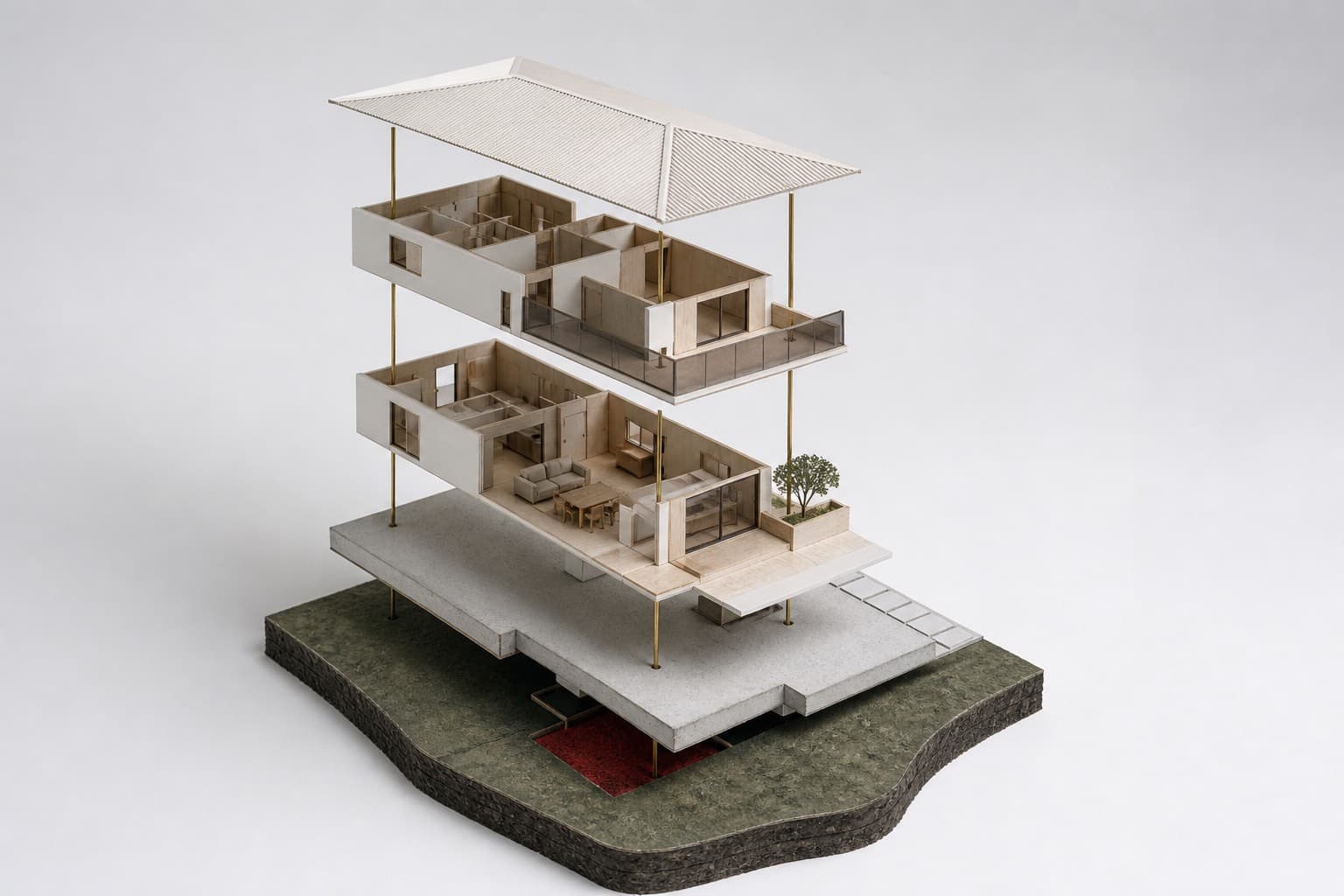
What property due diligence in Thailand actually means
Property due diligence in Thailand is the set of background checks a buyer runs before paying for real estate: who really owns it, what debts and rights are attached to it, whether it can legally be used as planned, and whether the person selling it has the authority to sell.
None of it is required by law. The Land Office will register a transfer whether or not you checked anything. That is the point: the system assumes the buyer has done their homework, and a problem discovered after transfer is usually the buyer's problem.
This guide walks through what a thorough check covers, in roughly the order a property lawyer works through it. If you are still earlier in the process, the broader legal checklist for buying property in Thailand covers the full purchase journey.
Title search at the Land Office
Everything starts with the title. Thailand's land register is held at the provincial Land Office responsible for the plot, and the official record there is what matters legally. The seller's copy of the deed is only a copy, and a copy can be outdated or forged.
A title search confirms three things:
- The registered owner. The name on the register must match the person or company selling. If it doesn't, the deal stops until the gap is explained.
- The title type. Not all Thai land titles carry the same rights. A Chanote (Nor Sor 4 Jor) is the strongest, with surveyed boundaries and full transfer rights. Lower-grade documents carry weaker rights, and some cannot be sold or mortgaged at all; the full title-deed ladder is worth understanding before you commit. A property lawyer in Thailand can confirm which title type applies and what rights it carries before you commit.
- The chain of ownership. How the seller came to own the land. A recent transfer at an odd price, or a chain that runs through a dissolved company, is worth a closer look.
For a condo, the search also confirms the unit's title and checks the building's foreign ownership quota. Foreigners can own condo units outright, but foreign ownership in a building is capped at 49% of the saleable floor area under the Condominium Act. If the quota is full, a foreign buyer cannot register the unit in their own name no matter what the contract says.
Encumbrances: mortgages, servitudes and other registered rights
The second half of the title search is the encumbrance check. Thai law requires most significant property rights to be registered on the title at the Land Office, which means a careful reader can find them. Common entries:
- Mortgages. The most frequent finding. A mortgaged property can still be sold, but the mortgage must be discharged at or before transfer, usually by paying the bank out of the purchase price at the Land Office on transfer day. The mechanics need to be written into the contract.
- Servitudes. Rights that benefit a neighbouring plot, such as a right of way across the land. A servitude survives the sale, so you inherit it.
- Usufructs, superficies and habitation rights. Registered rights that let someone else use, build on, or live on the property, sometimes for life. A registered usufruct in a third party's favour can make a property close to worthless to a buyer who wants to live there.
- Liens and seizure orders. Court attachments or execution entries that block transfer entirely until resolved.
A clean title search report lists every entry and explains what each one means for the purchase. An entry is not automatically a deal-breaker, but an unexplained one is.
Zoning, land use and access
A clean title tells you the land can be owned. It does not tell you the land can be used the way you plan.
Thailand's city planning rules divide land into zones that control what can be built where: residential, commercial, agricultural, industrial, conservation. A plot zoned agricultural may not legally support the villa development the seller is marketing. Coastal and hillside land can carry extra construction restrictions, including building height and distance-from-shore rules in some areas. Environmental and forestry overlays exist too, and land that overlaps a protected forest area is a serious red flag regardless of what the title says.
Two more practical checks belong here:
- Legal access. Confirm the plot connects to a public road, or has a registered right of way. Land-locked plots exist, and an informal "we've always driven through the neighbour's land" arrangement is not a legal right.
- Boundaries. For land purchases, a surveyor's check that the physical boundaries match the title plan. Boundary creep between neighbouring plots is common in older subdivisions.
Local rules vary a lot. A lawyer who knows the area can check the zoning at the local authority rather than guessing from a map, which is one reason buyers in specific markets often work with a local lawyer who deals with that Land Office and town planning department every week.
Building permits and construction legality
For a house, villa or any built structure, the building itself needs checking, not just the land under it.
Construction in Thailand requires a building permit from the local authority, and the finished building should match what the permit approved. The checks here are:
- Does a permit exist for the structure, and was a certificate of completion issued where required?
- Does the building match the permit? Extra floors, extensions and pool houses added after the permit are common, and unpermitted construction can in principle be ordered modified or demolished.
- House registration book (Tabien Baan). The blue book confirms the building is registered with the local district office.
Buying a house with no permit history does not always kill a deal, but it changes the price conversation and the risk you are accepting. You want to make that choice knowingly.
Seller authority and company checks
The person across the table must have the legal power to sell. What that means depends on who the seller is.
- Individual sellers. Verify identity against the title. If the seller is married, the spouse's consent is generally needed to sell marital property. If someone is selling under a power of attorney, the document needs careful verification: forged or expired powers of attorney appear regularly in Thai property fraud cases.
- Company sellers. Pull the company affidavit from the Department of Business Development to confirm the company exists, who the authorised directors are, and whether the signatory can bind the company. Check for registered debts and, where the deal is large, whether the sale needs shareholder approval.
- Estate sales. If the registered owner has died, the seller must hold a court appointment as estate administrator before they can transfer.
This is also where a lawyer checks for litigation against the seller. A seller being sued, or in visible financial distress, raises the odds of the property being attached by a court between contract and transfer.
Contract review before you sign anything
Due diligence findings only protect you if the contract reflects them. In Thailand the sale and purchase agreement is where the deal's real terms live, and there is no standard form a court will fix for you afterwards.
A contract review checks, at minimum: that the deposit terms say what happens if either side walks away, that any mortgage discharge is handled at transfer, that the split of transfer fees and taxes is explicit, and that the transfer date and conditions are clear. Transfer costs typically include a 2% transfer fee plus either stamp duty or specific business tax and a withholding tax, and the rates depend on the property and the seller; confirm the current figures with the Land Office and the Revenue Department rather than relying on the listing agent's estimate. The guide to property transfer fees breaks down each charge.
If a deposit is requested before due diligence is complete, the contract should make the deposit refundable if the checks turn up a defined problem. Lawyers handling property purchase contracts negotiate exactly this clause. Condo buyers preparing for transfer day can hand the registration itself to a condo title transfer lawyer.
Off-plan and developer checks
Buying off-plan means paying for something that does not exist yet, so the due diligence target shifts from the property to the developer.
The core checks: does the developer own the land the project sits on, or is it mortgaged to a financing bank? Is the project licensed, with an environmental approval where one is required? What is the developer's track record of finishing previous projects on time? And does the contract protect your staged payments if construction stalls?
Off-plan buyers face this extra layer of risk, and the guide to off-plan condo purchases in Thailand covers developer contracts, payment schedules and what to do when a project goes wrong.
How long it takes and what it costs
A focused condo check, where the title is usually simple, often takes about a week. A land or villa purchase with zoning, permit, access and corporate seller checks more commonly runs two to four weeks. Building the time into your purchase timeline matters more than compressing it: a seller who refuses to allow time for basic checks is telling you something.
Costs vary with scope, so get fixed quotes for the specific property. For foreign buyers, the check is also where the ownership structure gets confirmed: whether the unit fits the condo quota, or whether the land plan relies on a lease or land-use right instead, which connects back to the wider question of how foreigners can buy property in Thailand.
Find a lawyer to run the checks
Due diligence is the cheapest insurance in a Thai property deal. Almost every expensive property dispute starts with a check that was skipped.
You can compare property due diligence lawyers in Thailand on Justenda, message firms directly, and ask for a fixed quote for your specific property before you commit.
Whatever shortlist you start from, verify each lawyer's credentials, relevant property experience, conflicts, fees, and current availability yourself before you instruct anyone.
A note on what this guide is
This is general information to help you understand what property due diligence in Thailand covers, not legal advice. Title rules, zoning, fees and tax rates change, and every property is different. Confirm current requirements with the Department of Lands, the local Land Office, and a qualified Thai lawyer before relying on anything here for a purchase.
Frequently asked questions
- What does property due diligence in Thailand include?
- A title search at the Land Office, a check for mortgages and other registered encumbrances, zoning and land-use verification, a building permit review for houses and villas, checks on the seller's identity and authority to sell, and a review of the sale contract. For off-plan purchases it also covers the developer's licences, land ownership and track record.
- Can I do a title search in Thailand myself?
- The register is held at the Land Office and an owner, or someone with the owner's consent, can request information about a plot. In practice the records are in Thai and the encumbrance entries take legal knowledge to interpret, so most foreign buyers have a lawyer run the search and report on what it shows.
- How much does due diligence cost in Thailand?
- Fees vary by firm and by scope. A basic condo title check costs less than a full land investigation with zoning, permit and corporate seller checks. Ask lawyers for a fixed quote for the specific property before you commit, and compare quotes from more than one firm.
- What is the biggest risk if I skip due diligence?
- Paying for property the seller cannot legally transfer, or taking transfer subject to a problem you did not know about: an undischarged mortgage, a registered usufruct in someone else's favour, a building without a permit, or land that cannot legally be used the way you plan.
- Is due diligence different for a condo than for a house?
- The core title and seller checks are the same, but a condo check adds the foreign ownership quota and the building's juristic person accounts, while a house or villa check adds more weight on zoning, building permits and access to the land.
Sources
- Department of Lands: Land transferdol.go.th
- Revenue Departmentrd.go.th/english
- Revenue Departmentrd.go.th/english/6042.html
- Department of Lands: Property valuationdol.go.th
General information only, not legal advice. Laws and processes in Thailand change; confirm details with a qualified professional.